
Erica Grindinger
Special Education Intensive Resource
UNIQUE LEARNERS
Special Education Professional Portfolio
Resources
The linked resources include a brief description of each tool, explaining its content, intended audience, what can be seen as advantages and even what could be portrayed as disadvantages!
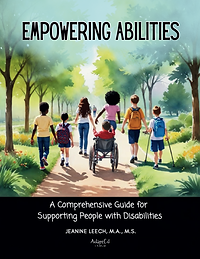
Empowering Abilities
By: Jeannie Leech, M.A., M.S.
Description
Written by special education professional Jeanine Leech, this book provides practical guidance for supporting individuals with disabilities. It focuses on understanding behavior, building skills, and advocating effectively, offering clear strategies and tools that bridge the gap between educational theory and everyday practice.
Audience
Parents, educators, and support professionals working with individuals with disabilities.
Advantages
Provides practical, real-world tools and strategies that can be applied in classrooms and at home; written in family-friendly language that is accessible to non-professionals; strengthens advocacy skills and understanding of IEPs, FBAs, and BIPs; draws on the author’s 20+ years of experience in special education and behavior support.
Disadvantages
Not a peer-reviewed or formal academic text, so it may lack detailed research citations; some content may be too general for highly specialized needs or complex cases; approaches reflect the author’s perspective and may not align with every educational or therapeutic model.

Pathway to Support
By: AdaptedEd
Description
Pathway to Support is a strength-based handbook that guides educators, families, and support staff in creating practical behavior supports and plans. It emphasizes understanding big emotions through the Regulate → Connect → Plan framework and includes case studies, sensory strategies, communication tools, and team collaboration methods that can be applied in classrooms and home settings.
Audience
Educators, support staff, and families looking for clear, practical strategies to align support across roles and settings.
Advantages
Offers immediately usable tools and strategies for behavior, communication, and sensory supports; encourages collaboration among school teams and families; written in plain, accessible language that makes it easy to implement without specialized training; helps translate principles into daily practice rather than abstract theory.
Disadvantages
Not a highly structured program—users must adapt guidance to their unique context; lacks extensive research citations, so may not satisfy those seeking formal evidence; may not cover highly complex or specialized situations, requiring additional professional support.
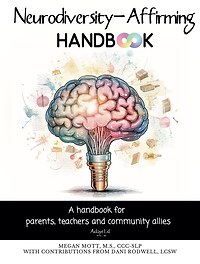
Neurodiversity-Affirming Handbook
By: AdaptedEd
Description
A handbook designed to provide ready‑to‑use tools that support neurodivergent learners in home, school, and therapy settings. It emphasizes strength‑based language and practices, includes visuals and templates, and offers behavior, communication, and sensory strategies that respect each learner’s unique ways of thinking and interacting with the world.
Audience
Educators, therapists, parents, and support staff seeking practical, affirming approaches for working with neurodivergent individuals.
Advantages
Provides concrete, usable tools (checklists, templates, collaboration guides) that can be applied immediately with neurodivergent learners; framed from a strengths‑based, affirming perspective that respects and values neurological diversity; built by neurodivergent professionals and structured to support teams across settings without requiring extensive prior training.
Disadvantages
As a handbook, it may not include extensive research citations or deep theoretical background; not all users may find the tools sufficient for every complex or specialized situation; professionals looking for formal clinical guidance or empirical evidence might need to supplement with more technical neurodiversity‑affirming texts.

BasicFBA.com
Description
BasicFBA.com provides step-by-step training and resources for Functional Behavioral Assessments (FBAs) and Behavior Intervention Plans (BIPs). The site includes practical tools, downloadable forms, coaching checklists, and modules designed to help educators and school teams understand behavior, plan interventions, and implement strategies effectively. It also offers guidance for school-wide trainings and support for Positive Behavioral Interventions and Supports (PBIS).
Audience
Educators, school staff, and parents seeking to understand or implement FBAs and BIPs.
Advantages
Offers detailed, practical tools and resources that can be applied in classrooms and school settings; supports school-wide training initiatives; provides guidance for PBIS implementation; helps parents and caregivers gain insight into the structure and logic behind FBAs and BIPs.
Disadvantages
Not written primarily for parents, so some content may be too technical or detailed for those without a background in education or behavior support; not formally accredited or externally reviewed; limited independent ratings or feedback; parents may need additional, more accessible resources to fully understand FBAs and BIPs.
Inclusive Special Education
By: Garry Hornby
Description
This book synthesizes research and evidence‑based practices that support inclusive education for students with special needs. It offers a framework grounded in scientifically sound theory and research, along with strategies that practitioners can apply in schools and classrooms.
Audience
Educators, special education professionals, school psychologists, and graduate students interested in research‑supported approaches to inclusion.
Advantages
This resource is grounded in peer-reviewed research and scholarly evidence related to inclusive practices in education. It provides both theoretical foundations and practical applications for supporting diverse learners in school settings. Additionally, it helps readers understand how evidence-based strategies can improve inclusive practices at both the classroom and school level.
Disadvantages
As an academic text, this resource may be less accessible for readers without a strong background in educational research. Some of the content is more theoretical in nature and may not provide step-by-step classroom strategies. Additionally, the broader research focus may require educators to adapt the concepts to fit their specific classroom contexts or student needs.

The Explosive Child
By: Dr. Ross Greene, Ph.D.
Description
Focuses on understanding challenging behaviors in children through a collaborative and problem-solving approach. The book explains that many behavioral challenges stem from lagging skills rather than intentional defiance and provides a framework called Collaborative & Proactive Solutions (CPS) to help adults work with children to identify problems and develop solutions together.
Audience
Parents, educators, and professionals supporting children with behavioral or emotional challenges.
Advantages
Provides a practical, relationship-focused approach to understanding challenging behavior; emphasizes collaboration and problem solving rather than punishment; includes clear examples and strategies that can be used in home and school settings.
Disadvantages
The approach focuses broadly on behavior and skill development rather than specifically on formal school processes like FBAs or BIPs; some strategies may require time and consistency to implement effectively within structured school systems.