
Erica Grindinger
Special Education Intensive Resource
UNIQUE LEARNERS
Special Education Professional Portfolio
The Spectrum Concept
Understanding the Spectrum
-
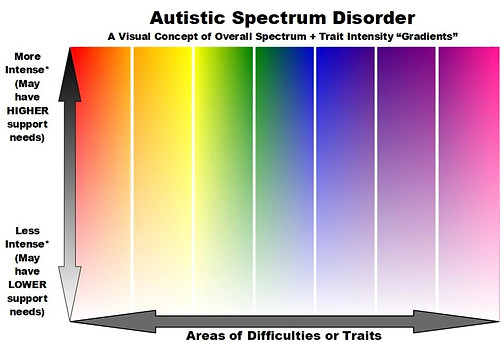
The term "spectrum" reflects the wide variety of symptoms and levels of support needs that individuals with autism may have, from very subtle to highly noticeable.
-
Autism is called a spectrum because it encompasses a wide range of characteristics and abilities.
-
Individuals may experience challenges in social communication and behavior, but the intensity, appearance, and impact of these challenges can vary significantly.
Limitations of Functional Descriptions
-
Functional labels (like “high” or “low functioning”) fail to capture the complexity of autism, as they reduce an individual's diverse abilities and challenges to a single descriptor.
-
Functional labels can lead to misconceptions, such as assuming that someone labeled “high functioning” does not need support or that a “low functioning” label implies limited potential.
-
Risks reinforcing stereotypes, potentially influencing others' expectations and limiting access to resources or opportunities that may benefit the individual’s unique strengths and needs.
-
Support needs can fluctuate depending on the environment, task, or time in life, making it essential to consider the individual holistically.
-
Individuals may experience challenges in social communication and behavior, but the intensity, appearance, and impact of these challenges can vary significantly.
Common Characteristics for Autistic Learners with Less Obvious Support Needs
-
Social Communication Challenges
-
Restricted and Repetitive Behaviors
-
Social Anxiety or Withdrawal
-
Executive Functioning Challenges
-
Emotional Regulation Difficulties
-
Academic Strengths and Challenges
-
Delayed or Unusual Developmental Patterns
To learn more about each one of these characteristics, click the link below!
Diagnosis for Autistic Learners with Less Obvious Support Needs
-
These individuals have an IQ of 70 or above and average to above-average cognitive abilities. They are often overlooked or misunderstood due to the less obvious support needs they display or their "masking" ability. Masking is explained below.
-
Previously, people in this group were identified with Asperger’s Syndrome (characterized by average or above-average intelligence and typical language development).
-
Since the DSM-5 merged Asperger’s Syndrome with ASD in 2013, grouping all individuals under the ASD umbrella, this classification no longer exists. Individuals previously diagnosed with Asperger's continue to retain the diagnosis in their medical or educational records.
Diagnosis Challenges, Masking, Missed Diagnosis,
& Late in Life Diagnosis
-
Females with average or above-average IQs are four times less likely to be diagnosed with autism and are more prone to misidentification than boys. Their symptoms are often less visible or masked, leading to delayed diagnosis, sometimes into adulthood.
-
Many individuals on the spectrum learn to “mask” or hide their autism symptoms, which can delay or complicate diagnosis.
Click the link below to better understand masking
-
Others may have initially been diagnosed with ADHD, OCD, or social anxiety due to overlapping symptoms.
-
Research shows that around 10.3% of adults with ASD were misdiagnosed with ADHD during childhood, and 12.1% of children diagnosed with ADHD were later diagnosed with ASD.
-
-
Individuals with average to above-average intelligence often go undiagnosed until adolescence or adulthood, as their ability to excel in academics and social situations may obscure symptoms.